Popular Posts

Monday, April 19, 2010

Mars Hill Music - Some Do's and Don'ts

Mars Hill Church in Seattle (Mark Driscoll's church) have been producing some amazing worship music, and a lot of it is now available for download with a suggested donation.

I have recently downloaded their Rain City Hymnal EP, which is a collection of traditional hymns that have been rearranged, the Red Letter album, and the Good Friday Live Worship album. They have all blown my mind.

The interesting thing about them is this: it is always very obvious what Scripture passages the lyrics come from, the hymns all use the traditional words (thees and thous, and other very evocative, profound English words and phrases that have fallen out of common use) but the music is the edgiest, most creative combination of synths and grinding electric guitars, earth-shifting bass and gut-thumping drumming I have heard in ages! It seems like they're channeling the Seattle-sound in a big way. The version of Psalm 51 sounds like they had Soundgarden as the backing band!

You can read an interview with one of the worship pastors and band frontmen here.

Music like this, however, can raise some issues for us as local church musicians. Here are some helpful suggestions for things we can learn from this approach to church music.

  • DON'T try and mimic what is done at Mars Hill, unless you have some phenomenal rock musicians with pro quality gear, a 10, 000W PA system, a congregation of 3, 000.
  • DO learn to use what resources you have, just like Mars Hill has done. When you do a good job with what you have, you will have a solid foundation to build on. Jesus said in Luke 16 "Whoever can be trusted with very little can also be trusted with much". If all you have now is a violin and a guitar and singer or two, work hard with that and ask God to bless you with more.
  • DON'T use heavy rock for your worship services because that's what Mars Hill is doing.
  • DO think about your congregation and what music would suit them best. If it is heavy rock, then pursue that.
  • DON'T think that the only way to present these songs is to do them the same way Mars Hill have done.
  • DO learn to separate out the song itself. Use the chords that are downloadable from their website and try and do the song with just a voice and an acoustic guitar or piano. The strength of a good song is its ability to "carry" in a variety of musical contexts, not just the one it is written in.
Lastly,
  • DON"T get discouraged that your church's music will never be like Mars Hill's.
  • DO listen to these songs to be encouraged, get ideas and learn a thing or two about the variety that can be present in the music Christians use to worship God.
Friday, April 16, 2010

Using A Capo

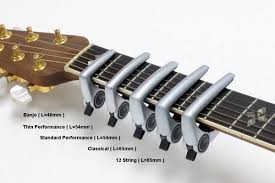
Guitar player, love your capo! And learn to use it. It is one of the most valuable tools a guitarists has.

A capo is useful for
  • Playing simple chords in a difficult key.
  • Changing the sound of chords. This is important for when two guitars are playing together, because if one guitar uses a capo to play the chords in a different position, it can help the guitars to sound more distinct. You can also use it to "lighten" the sound of the guitar by playing the chords in positions higher up the neck.

The key to all of this is to learn the notes on your neck and learn your open chord shapes, and learn where the capo must go to play various chords. For instance, you need to know that placing the capo behind the 3rd fret and using the chords from the key of G (G, C, D, Am, Em) you will be playing in Bb. This is because your root note is now at the 6th fret on the low E, which is Bb.

Similarly, if you have the capo behind the 5th fret and you use the same chords, you will be playing in C. And if you use the capo behind the 4th fret and use the chords from the key of D (D, G, A, Bm, Em) you will be playing in the key of F#.

This does take learning, there are no shortcuts. Perhaps the best advice is to start thinking about the chords in songs in terms of their scale degrees instead of just their names. So in G, G=I, Am=ii, Bm=iii, C=IV, D=V, Em=vi and F#m=vii. Try and work out how chords in other keys relate to each other like this, and you will begin to become a musical demon! Then it becomes easier to 'translate' a chord to a different capo position.

Remember also that the capo functions exactly like your guitar's nut. In order for it to work properly it must be as close as possible behind the appropriate fret so that the strings break hard over the metal of the fret.

Troubleshoot:
  1. Setting the capo too far back from the fret will make the strings buzz
  2. Setting the capo skew will make the guitar sound out of tune
  3. A capo that is too tight will pull the strings out of tune, a capo that is too loose will make the strings buzz. If you can adjust the tension of your capo then great, otherwise it's time to go shopping.
  4. If you get all the above right and the guitar is still buzzing, sounding out of tune, etc., it's time to take it to the shop for a service.
Lastly, don't buy a rubbish capo. The best ones are by Shubb (http://www.shubb.com/), but Dunlop and Kyser also make great capos that are quick and easy to put on and take off, and can be clipped the headstock when not in use. The only problem with these is that they pull the strings slightly sideways because of the clamp action. (My favourite is the Dunlop Trigger capo http://www.jimdunlop.com/index.php?page=products/pip&id=67&pmh=products/capos)

If all of this is a bit complicated, never fear! Perhaps a video will help... watch this space!

Friday, March 26, 2010

Top Ten Tittilating Titles


This is a Friday post for a bit of a chuckle. As those involved in worship and music ministry we must always be careful of taking ourselves too seriously - instead we must always strive to take God seriously.

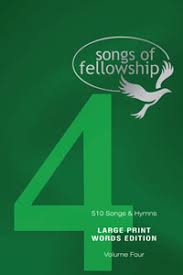
This list has been compiled from the Songs of Fellowship series of songbooks, which I have to say are some of the best out there. For singable, Biblical, honestly Christian songs, you can't go wrong with these four in your library. That said, there are some clangers in the index which are worth a laugh! Here are my Top 10:
  1. I Danced in the Morning (Lord of the Dance)
  2. Oh, He's So Sweet (So Sweet)
  3. Superlatives
  4. I Have An Appetite
  5. Great, Great, Brill, Brill
  6. I Want To Be Out Of My Depth In Your Love
  7. It's Funny How
  8. I Once Was Frightened of Spiders
  9. Lost In The Shuffle
  10. I Am A Lighthouse
If you wrote any of these songs, or if any of these songs help you worship God from a sincere heart, then please don't be offended. Keep singing His praise!

Thursday, March 18, 2010

Give your junk to Jesus!

Last week I read a really interesting article from a secular publication on church sound systems. The guy writing it was really perplexed at the phenomenon known as "give your junk to Jesus" where Christians think it's ok, and in fact really commendable to sacrificially give their church whatever beat-up, crusty old bit of audio kit they have rotting in their garage for the sake of ministry.

And this doesn't just apply to church sound, but often to all areas of the church. How about that toaster in the kitchen that threatens to electrocute you just for looking at it? Given by someone with a healthy fear of electrical fires, but who wished to bless the church with a kind gift.

I am injecting a healthy dose of humour here, and I am not thinking of any particular churches. At our own church, we are very blessed by many people who give their best very sacrificially. In my experience though, it is something that all churches suffer from, to a greater or lesser extent. Here's some food for thought:

God deserves our best.
Numbers 18v29 gives Israel guidelines for their offerings presented to God: "You must present as the Lord's portion the best and holiest part of everything that is given to you." God has given us his firstborn son. He has blessed us beyond measure. How can we not give our best back to God? It must be said that if a second-hand toaster is all you are able to give, then give cheerfully! God owns all that we have anyway, he is far more concerned about the attitudes of our hearts.

Second-hand is usually short-sighted.
Receiving a second-hand item will always carry the risk of expired warranty, unforeseen damage and obsolescence. What this really means is that it's cheap to receive, but you'll pay for it when something goes wrong. A church is always wiser buying new, a reliable brand, from a reputable dealer, with a watertight warranty.

Get the right tools for the job.
Second-hand is usually a compromise between what you actually need and what someone is willing to give you. If I want to cut tomatoes, I really need a tomato knife. But if someone has a rusty old chainsaw that they're not using, why should I refuse? (Please note that I am merely making a point - it is a bad idea to cut tomatoes with chainsaws.)


Personal and emotional attachment.
Beware of gratefully receiving the grotty old toaster, only to leave it out next to the dustbin when you realise that it might just kill someone or burn down your church. You may make that person very upset, even to the point of having a negative impact upon their spiritual life. It would perhaps have been wiser not to accept the gift in the first place.

Back to the future.
Buy your second one first. This is a wise word. Yes the price tag is bigger, yes it will take more effort. But when God blesses the church with growth you don't want to have to spend what you spent the first time again and more to meet your needs. In faith, look to the future.


Give cheerfully. Receive gratefully. In faith, ask God to provide what you need. Trust him to build his kingdom the best way possible. And don't give God your junk, give him your best.

Wednesday, February 24, 2010

Great Hymn Arrangement


A great idea from an odd place. Sufjan Stevens did this hymn for his Hark! Christmas EP. The tune is the traditional tune of Nettleton (87 87 if it means anything to you). and even if you don't have a banjo, an acoustic guitar will do just fine.

Don't be tempted to lose the old hymns! The words are so beautifully crafted to illuminate the truths of God's Word and the Christian life. New arrangements like this can breathe new life into these old hymns and resurrect them for a new generation.

Words:

COME THOU FOUNT OF EVERY BLESSING,
Tune my heart to sing Thy grace;
Streams of mercy, never ceasing,
Call for songs of loudest praise.
Teach me some melodious sonnet,
Sung by flaming tongues above.
Praise the mount! I’m fixed upon it,
Mount of Thy redeeming love.

Sorrowing I shall be in spirit,
Till released from flesh and sin,
Yet from what I do inherit,
Here Thy praises I’ll begin;
Here I raise my Ebenezer;
Here by Thy great help I’ve come;
And I hope, by Thy good pleasure,
Safely to arrive at home.

Jesus sought me when a stranger,
Wandering from the fold of God;
He, to rescue me from danger,
Interposed His precious blood;
How His kindness yet pursues me
Mortal tongue can never tell,
Clothed in flesh, till death shall loose me
I cannot proclaim it well.

O to grace how great a debtor
Daily I’m constrained to be!
Let Thy goodness, like a fetter,
Bind my wandering heart to Thee.
Prone to wander, Lord, I feel it,
Prone to leave the God I love;
Here’s my heart, O take and seal it,
Seal it for Thy courts above.

O that day when freed from sinning,
I shall see Thy lovely face;
Clothed then in blood washed linen
How I’ll sing Thy sovereign grace;
Come, my Lord, no longer tarry,
Take my ransomed soul away;
Send thine angels now to carry
Me to realms of endless day.

Robert Robinson (1735 - 1790) and John Wyeth (1770 - 1858)


Praise! Also has alternative lyrics for 3 of the verses.